
A small collection of writing and tea pieces drawn from English craft traditions. Each item is offered individually as a collectible object for personal use.
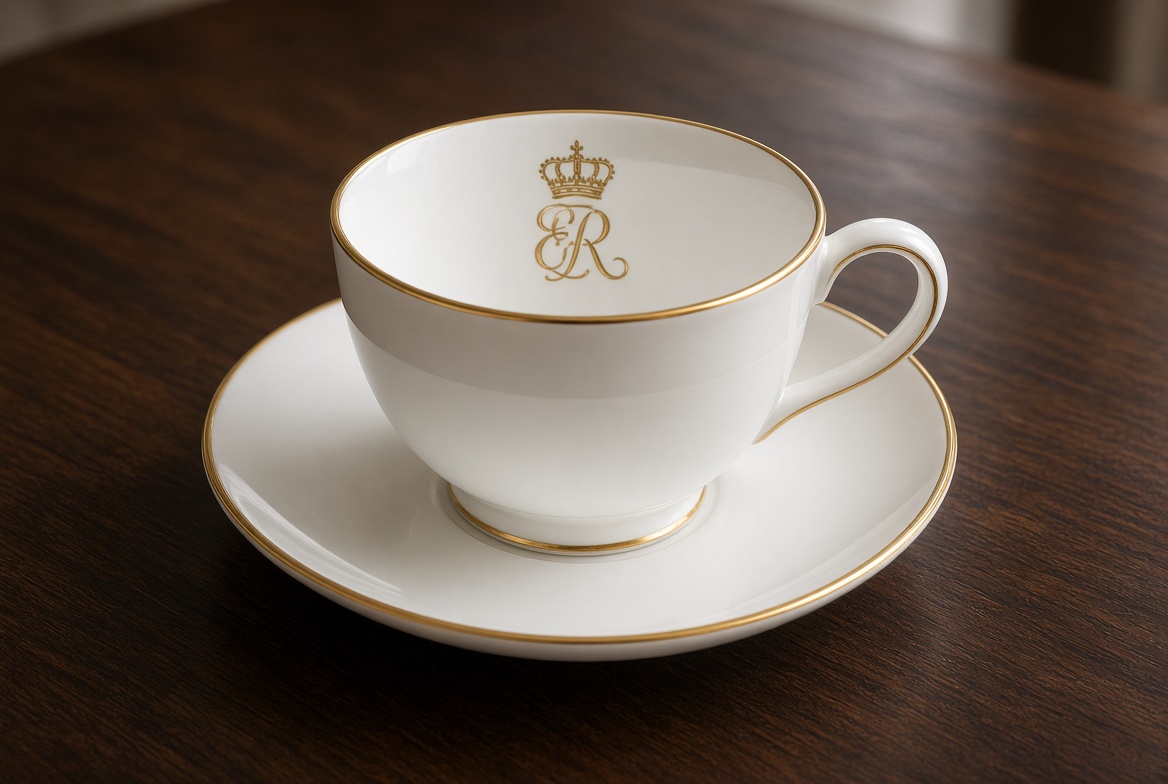
Bone china cup and saucer with gold rim and crowned cipher. Rooted in the Staffordshire bone china tradition perfected in the 1790s.
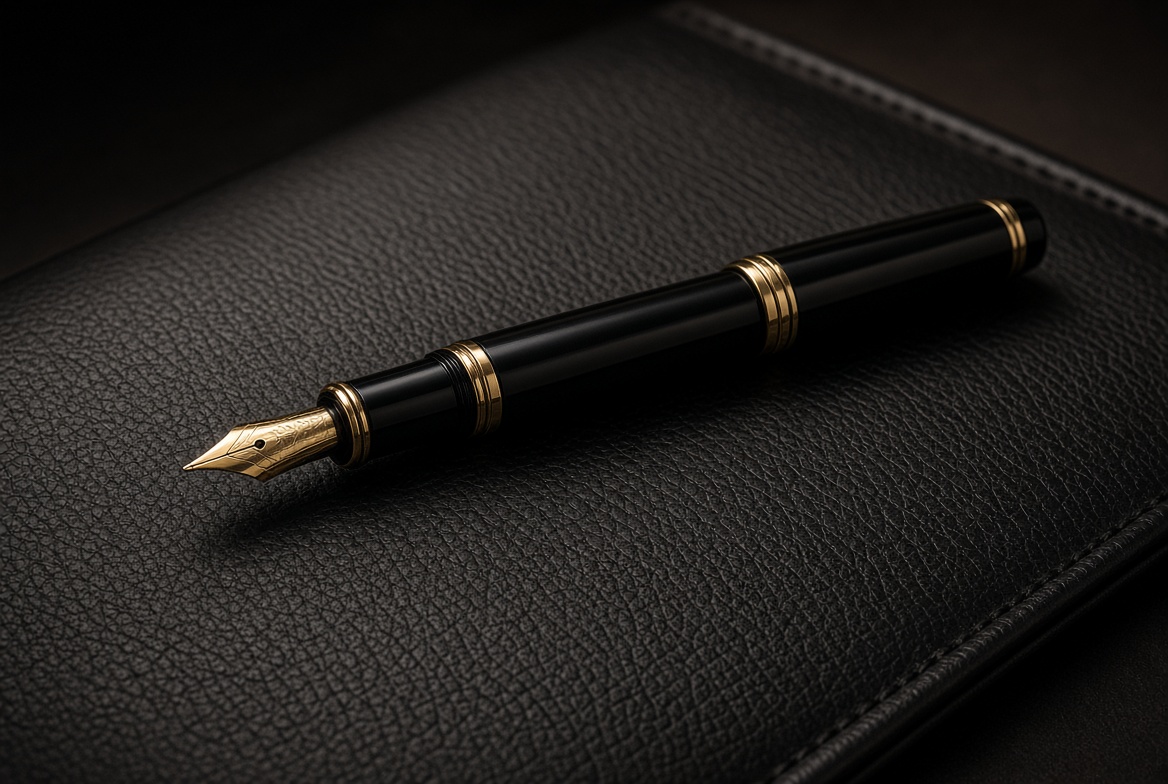
Black lacquer fountain pen with gold trim and gold-plated nib. Continues the capillary-feed lineage begun by Waterman in 1884.
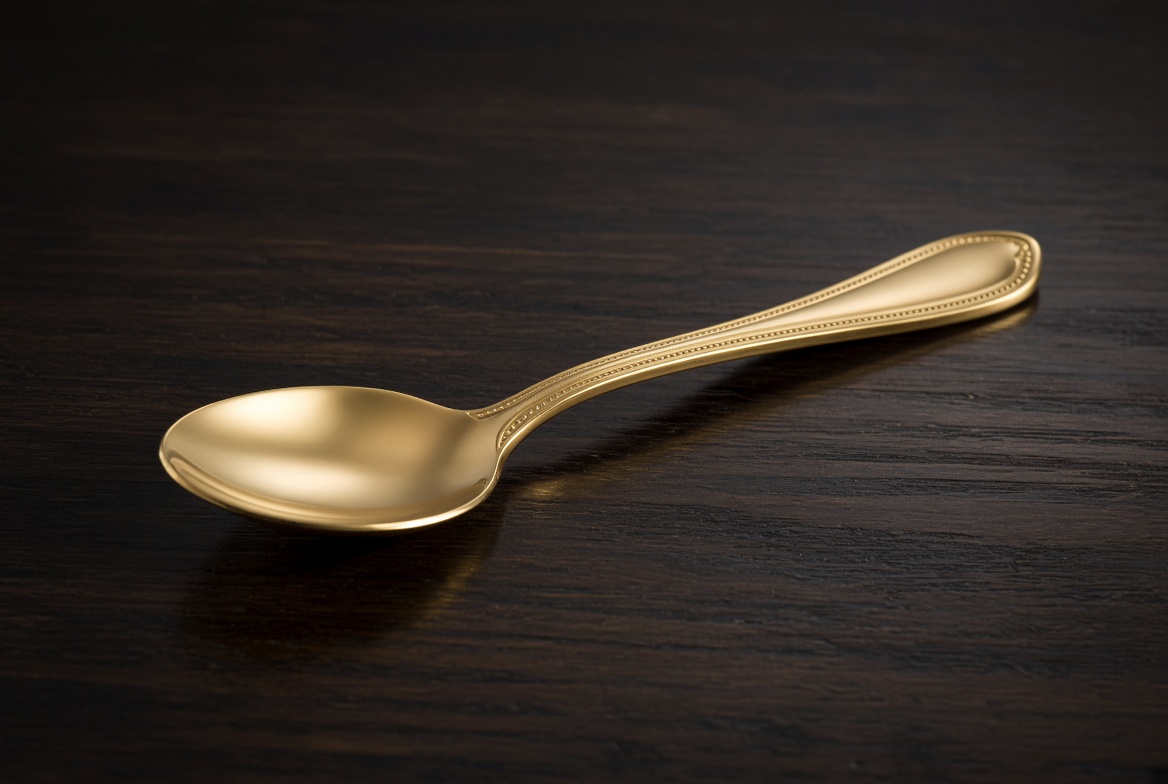
Gold-finished teaspoon in a classic English pattern. The teaspoon became a standard of the Georgian table and the ritual of afternoon tea.
Josiah Spode II refined a formula of bone ash, china stone and kaolin that produced a strong, translucent white body. English bone china became the material of choice for fine tea services through the nineteenth century, when afternoon tea — popularised in the 1840s — made the cup a daily object of ceremony.
Lewis Edson Waterman’s 1884 patent for a reliable capillary feed transformed the pen from a messy novelty into a practical writing instrument. British makers and importers brought gold-nib pens into offices and studies across the United Kingdom; the black-and-gold desk pen remains a familiar form of that tradition.
Small spoons for tea appeared as tea drinking spread in Britain from the seventeenth century. By the Georgian period the teaspoon was a standard piece of flatware. English silversmiths, regulated by the hallmark system of the Goldsmiths’ Company, set the pattern for quality that later electroplated and gold-finished spoons still echo.